Cut Bacterial Pressure
Remove Non-Viables on Day 9
10-15% of eggs set are non-viable. Remove them on day 9 instead of day 18 to reduce contamination risk, improve hatchability, and unlock around 15% additional incubation capacity.
Early candling
Why day 9, not day 18?
Most losses of eggs set occur within the first 9 days of incubation. Waiting until transfer means continuing to invest time, energy, and space in eggs that will never hatch, while the risk bacterial contamination keeps building up.
By identifying and removing non-viable eggs on day 9, you act right after the majority of losses have occurred, maximising the impact of removal.
- Reduces contamination risk in the incubator
- Improves hatchability and chick quality
- Frees up 10-15% incubation capacity
- Improves hatch predictions
1. Review
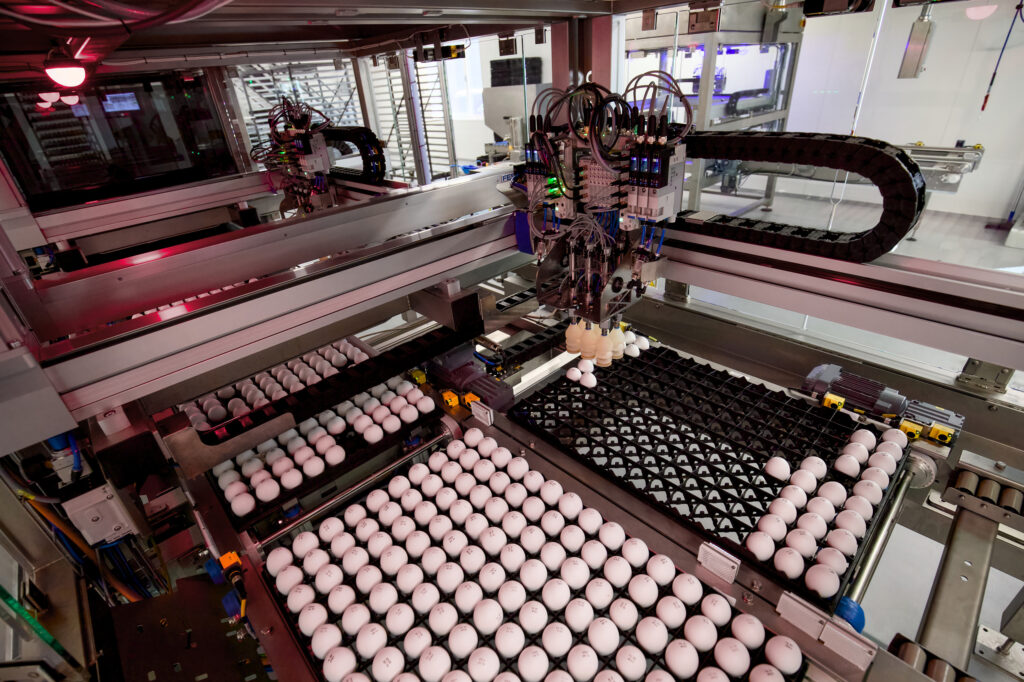
In the first module, eggs are imaged using green LED light and AI-based image analysis to classify viable and non-viable embryos with over 99.9% accuracy.
2. Reject
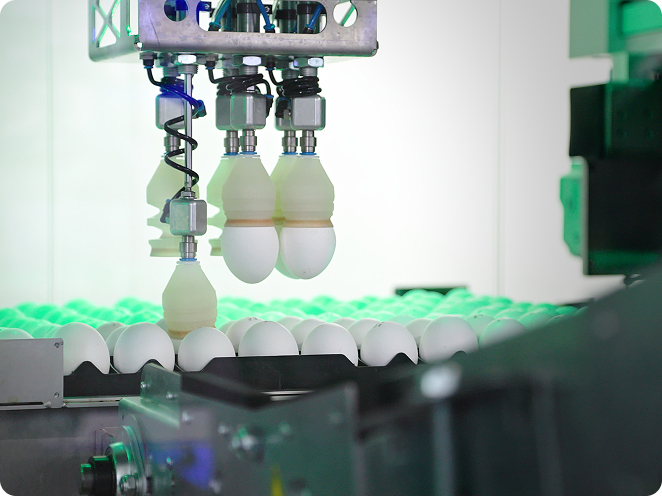
In the reject module, non-viable eggs are automatically removed. This significantly reduces the risk of contamination throughout the rest of the process.
3. Refill
In the final module, empty positions are refilled with viable eggs, maximising tray utilisation up to 100% (or adjusted to system limits).

From Unpredictable Risks To Controlled Incubation Performance
Non-viable eggs are one of the primary sources of contamination in the incubator. As they decompose, gas buildup increases the risk of cracking or exploding, exposing surrounding eggs to harmful bacteria.
By removing these eggs on day 9, SetGate significantly reduces cross-contamination risk and stabilises incubation conditions, directly improving chick health post-hatch.

Optimised Workflow and Flexibility
By shifting candling to day 9, unnecessary steps later in the process are eliminated, giving hatcheries more control over operations and planning.
- No candling required at transfer (day 18)
- Reduced labor dependency
- Flexible processing across multiple days starting from day 9
- Better batch predictability and planning
SetGate enables a more stable and efficient hatchery workflow. The system integrates into existing hatchery setups without major infrastructure changes, making it straightforward to implement within current operations.
Explore all About SetGate
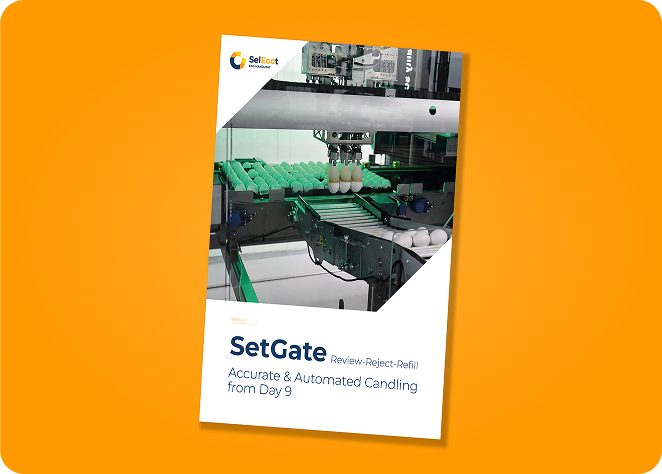
Get a complete overview of specifications, integration options and performance data. See how SetGate fits into your hatchery operation and what results you can expect in practice.
Frequently Asked
Everything you need to know about SetGate.
What is the main benefit of candling at day 9 instead of day 18?
Early candling at day 9 allows hatcheries to remove infertile and dead-in-shell eggs much earlier in the incubation process. This reduces bacterial pressure, improves hatchability and chick quality, and frees up valuable incubation capacity — typically around 15%, with even greater opportunities in older flocks.
How does SetGate identify viable and non-viable eggs?
SetGate uses green LED illumination combined with AI-powered image processing technology. Cameras capture internal egg images and analyse blood-vessel patterns to distinguish fertile, dead-in-shell, and infertile eggs with an accuracy exceeding 99,9%. The non-viable eggs are removed and trays are filled to 100%.
How does SetGate help reduce bacterial contamination?
Non-viable eggs can contain pathogenic bacteria that produce gas during incubation, increasing the risk of cracked or exploding eggs. When these eggs break, surrounding eggs can become contaminated. By removing infertile eggs and decomposing embryos from day 9 onwards, SetGate significantly lowers the risk of bangers, reducing cross-contamination, maintaining a cleaner incubation environment.
Can SetGate be integrated into existing hatcheries?
Yes. SetGate integrates seamlessly into existing hatcheries regardless of the type of setters and hatchers used. The system does not require additional investments in electrical infrastructure or external electrical partners, and installation and commissioning are completed within 30 hours upon delivery.
What capacity can the SetGate process?
As a stand-alone solution, the SetGate 150 Tray can process up to 24.100 eggs per hour with an average output of 21.700 fertile eggs per hour. The SetGate 88 Tray can process up to 16.000 eggs per hour with an output of 14.400 fertile eggs per hour.
What is the business impact of SetGate for my hatchery?
SetGate increases hatchery efficiency by removing non-viable eggs early in the incubation process.
By filtering out infertile eggs and early dead embryos between day 9 and 12, it reduces bacterial pressure in the incubator. This results in fewer exploding eggs, less contamination, and significantly less cleaning and downtime.
It ensures that incubator space is used only for viable eggs, improving machine efficiency and increasing output per cycle without additional capacity.
In short, SetGate minimizes process disruption, improves equipment efficiency, and creates a more controlled and stable incubation process.


Hilbert van der Linden
International Sales Manager











Ready to optimise your hatchery operations?
Speak with your local SelEggt expert — no obligation.