In-Ovo Sexing for Genetics
Accurate Sex Determination on Day 9.
In today’s genetics hatcheries, chick sexing is essential, yet challenging. SelEggt has developed a reliable and accurate DNA-based in-ovo sexing technology offering a cost-competitive alternative to manual vent sexing. Providing a female egg yield of 49% at an accuracy of over 99,5%.
Unmatched Accuracy, Optimised Yield.
SelEggt delivers the most precise in-ovo sex identification available today. The DNA-based in-ovo sexing technology determines the sex of an unborn chick on day 9 of incubation. This enables genetics and parent stock operations to remove male eggs significantly earlier than with conventional methods, maximising usable hatch capacity in operations worldwide.
With integrated early candling through SetGate, this automated process allows for the simultaneous removal of non-viable, reducing bacterial pressure.
This approach eliminates the need for specialised manual labour while delivering superior accuracy at approximately the same cost per egg as traditional sexing in genetics operations.
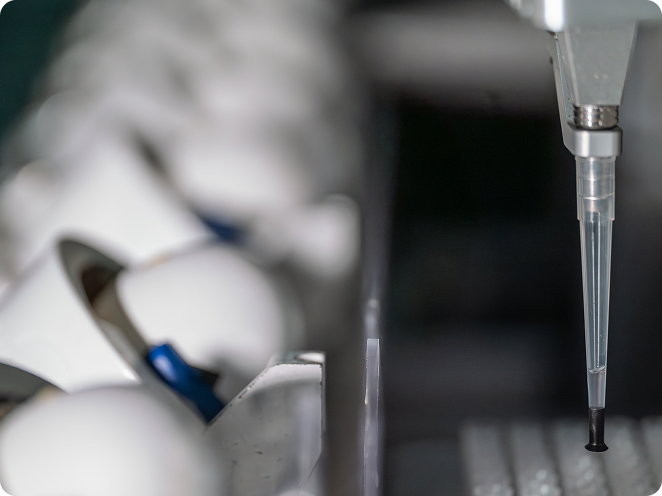
In-Ovo Sexing
How it Works
The system combines early candling with DNA-based analysis to enable reliable and scalable identification of female embryos under controlled conditions.
The process starts by removing infertile eggs and early embryonic mortality, ensuring that only viable eggs continue. Each egg is then automatically sampled and analysed via PCR, after which the system confirms the sex with high accuracy.
Based on the results, eggs are automatically sorted: female eggs continue incubation, while male eggs are redirected for alternative use. This streamlined and fully traceable process maximises incubator capacity and ensures a consistent output of female hatching eggs.
Maximum Female Yield
Maximises usable hatch capacity by ensuring only relevant eggs continue in the process. SelEggt delivers the highest female yield on the market, with up to 49% female hatching eggs at over 99,5% accuracy. The result is fully optimised trays of female hatching eggs, maximising incubator efficiency and female output in genetics programs.
Optimal Care
Ensures uncompromised hatchability through controlled, low-impact egg handling, with no exposure to forces above 1G. Stable process conditions and compatibility with all genetics support uniform results across varying operational environments.
Seamless Integration
Enables fast integration into (existing) hatcheries, with installation and commissioning completed within 80 hours after delivery. No additional electrical infrastructure or external installation partners are required. SelEggt has been successfully implemented in hatcheries across the United States, the Netherlands, Germany, and Norway.

Double-line
Easily Expandable
The SelEggt single-line system consists of a SetGate, a DNA sampling circuit and lab, a Conditioned Cabinet, and a Sorter. It is designed for scalability and can be upgraded to a double-line configuration by adding an additional DNA sampling circuit, extra lab equipment, and a second Conditioned Cabinet.
A single automated SelEggt system can process up to 16.5 million eggs per year, while a double-line configuration increases capacity to up to 33 million eggs annually, offering a cost-competitive alternative to manual vent sexing.

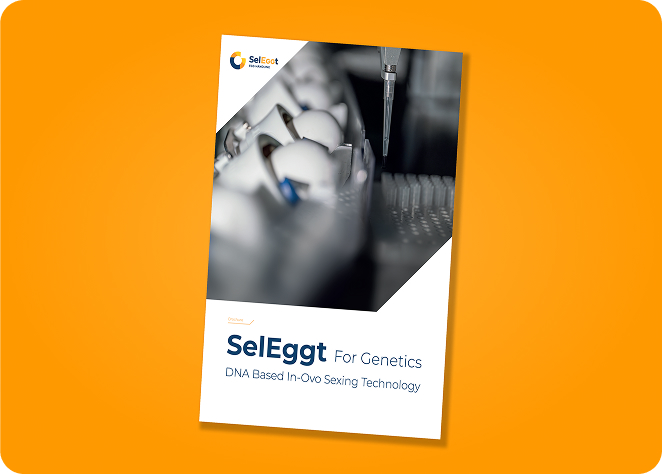
Explore the full SelEggt System
Get a clear overview of the system design, workflow, and performance of SelEggt. Learn how DNA-based in-ovo sexing delivers high accuracy and capacity, offering a cost-competitive alternative to manual vent sexing.
Real Hatcheries.
Measurable Results.
SelEggt systems are successfully integrated in hatcheries across Europe and North America, demonstrating reliable performance in diverse operational conditions.

Hatchery 'Het Anker' — The Netherlands
“We were looking for a sustainable and reliable system, and we decided to choose SelEggt. The SelEggt system is a strong, robust system. The machines are easy to use and deliver a high percentage of female chicks.”
Rinie Vroegindeweij,
Hatchery Manager ‘Het Anker’ The Netherlands
Frequently Asked
Everything you need to know about SelEggt.
How does the SelEggt in-ovo sexing technology work?
SelEggt uses a DNA-based in-ovo sexing process from day 9 of incubation. First, the SetGate removes infertile eggs and early embryonic mortality using AI-powered imaging with an accuracy exceeding 99.9%. Viable eggs then proceed to the DNA Sampling Circuit and Lab, where a DNA sample is taken from each individual egg and analysed by a PCR test to determine the sex. Female eggs continue in the incubation process, male eggs are used for other purposes.
What are the main advantages of SelEggt compared to manual sexing?
SelEggt eliminates the need for scarce, highly skilled manual vent sexing labour while improving accuracy and reducing labour costs. It also helps prevent unwanted damage to valuable chicks, reduces bacterial pressure, and provides predictable female yield results.
How accurate is the SelEggt system?
SelEggt achieves up to 49% female hatching eggs with an accuracy of over 99.5%. In addition, the SetGate identifies infertile eggs and early embryonic mortality with an accuracy exceeding 99.9%.
Can SelEggt systems be integrated into existing hatcheries?
Yes, both SelEggt In-Ovo Sexing and SetGate are designed for seamless integration into existing hatcheries. Installation and commissioning are completed within 80 hours for In-Ovo Sexing and 30 hours for SetGate upon delivery without requiring additional electrical infrastructure or external installation partners.
What is the business impact of in-ovo sexing for my hatchery?
In-ovo sexing improves hatchery efficiency, predictability, and compliance. It reduces incubator waste by removing male eggs early, so capacity is used for viable female chicks only. This results in a higher and more consistent female output without the need for post-hatch sexing.
By eliminating manual chick sexing, it lowers labor dependency and reduces operational complexity. Crucially, it enables predictable chick output. Sex is determined during incubation, so you know in advance how many female chicks will hatch. This improves planning, sales accuracy, and supply chain reliability.
In addition, it prepares your hatchery for current and upcoming regulations on chick culling.


Hilbert van der Linden
International Sales Manager











Ready to optimise your hatchery operations?
Speak with your local SelEggt expert — no obligation.